

I'm David del Cura —
I started as an engineer.
I became a designer.
I never stopped being both.
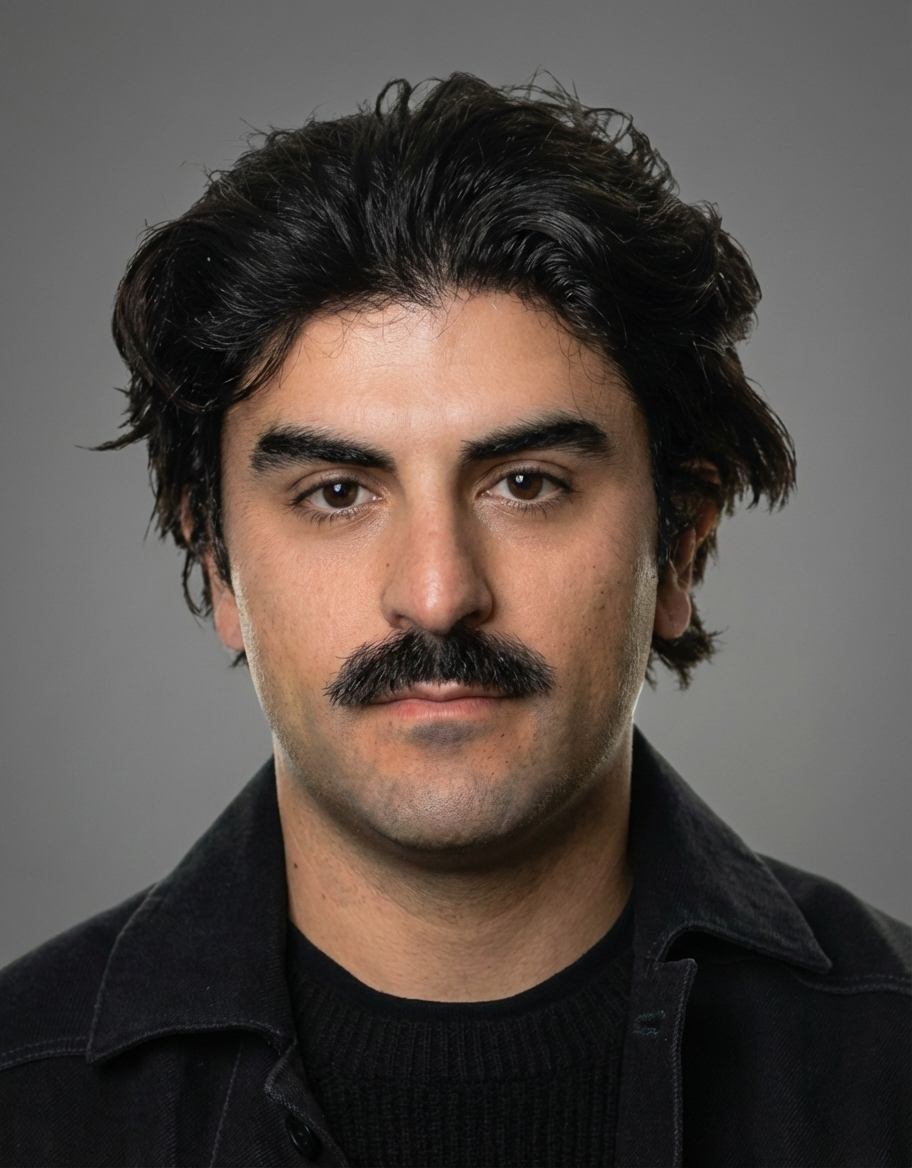
I work at the point where product decisions become engineering constraints and where design assumptions meet business reality. That gap — between what teams intend and what actually ships — is where I operate.
My background is hybrid by design: 3 years writing backend in C#, MongoDB and SQL, then frontend in React, Angular and TypeScript, then UX architecture for high-security government platforms, then leading design systems across 15 media brands at Vocento. Each layer added vocabulary. All of it is still active.
I don't handoff. I align — translating product logic into component architecture, connecting Figma tokens to deployed CSS, building AI workflows that cut friction before it becomes a sprint problem.
Trusted by teams across media, cybersecurity, and creative industries

















Origin
Since I was 14, I was building websites — designing them, coding them, deploying them. That dual instinct never went away. When I joined Sidertia as a backend engineer, I was writing C# for ANA, a high-security intelligence platform for CCN-CERT, the Spanish National Cryptology Centre. Complex data, strict regulatory constraints, zero room for ambiguity.
The engineering gave me a precise way of thinking about systems — how components interact, where logic should live, what breaks under scale. I moved to frontend, then to interaction architecture, then to Lead UX across the full cybersecurity product suite: ANA, CLARA, and internal tools for critical infrastructure teams.
"The inflection point wasn't a career decision. It was realising that the best design work I could do came from understanding what the engineers were constrained by — and speaking that language fluently."
From there, Vocento: Spain's largest media group, 15 editorial brands, one design system to coordinate them all. Four years building subscription infrastructure, aligning product, engineering and analytics, and eventually moving to lead design centrally across all of Vocento's digital products.
How I think
Most design problems aren't design problems. They're coordination problems dressed up as UX issues.
Design, engineering and business each have their own language, their own success metrics, their own definition of "done". When those three don't align from the start, you get slow delivery, rework, and products that are technically complete but strategically incoherent.
My work is to make that alignment structural — not a one-time conversation, but a system. Shared tokens. Documented decision patterns. Components with clear contracts. Architecture that engineers can build from and business can measure against.
Speed and cost reduction aren't byproducts of good design. They're the result of removing the friction that accumulates when teams operate in parallel instead of in sync.
How it works in practice
The question after how I think is how that turns into delivery — same loop, phase by phase, with real tools and concrete outputs. By the time you reach the stack below, it’s not an abstract list: it’s what you just stepped through.
Stack & tools
Design
Engineering
AI & automation
Product
Beyond product
Since childhood I've studied music formally — 15 years of harmony, composition and theory. Today that translates into work as music producer, composer and sound designer, operating at the intersection of electronic and organic sounds.
The parallel isn't decorative. Music is one of the oldest systems design disciplines — constraints enabling infinite variation inside a structure. That logic shows up everywhere in how I approach product architecture.
Madrid. Coffee. Building things that work.